
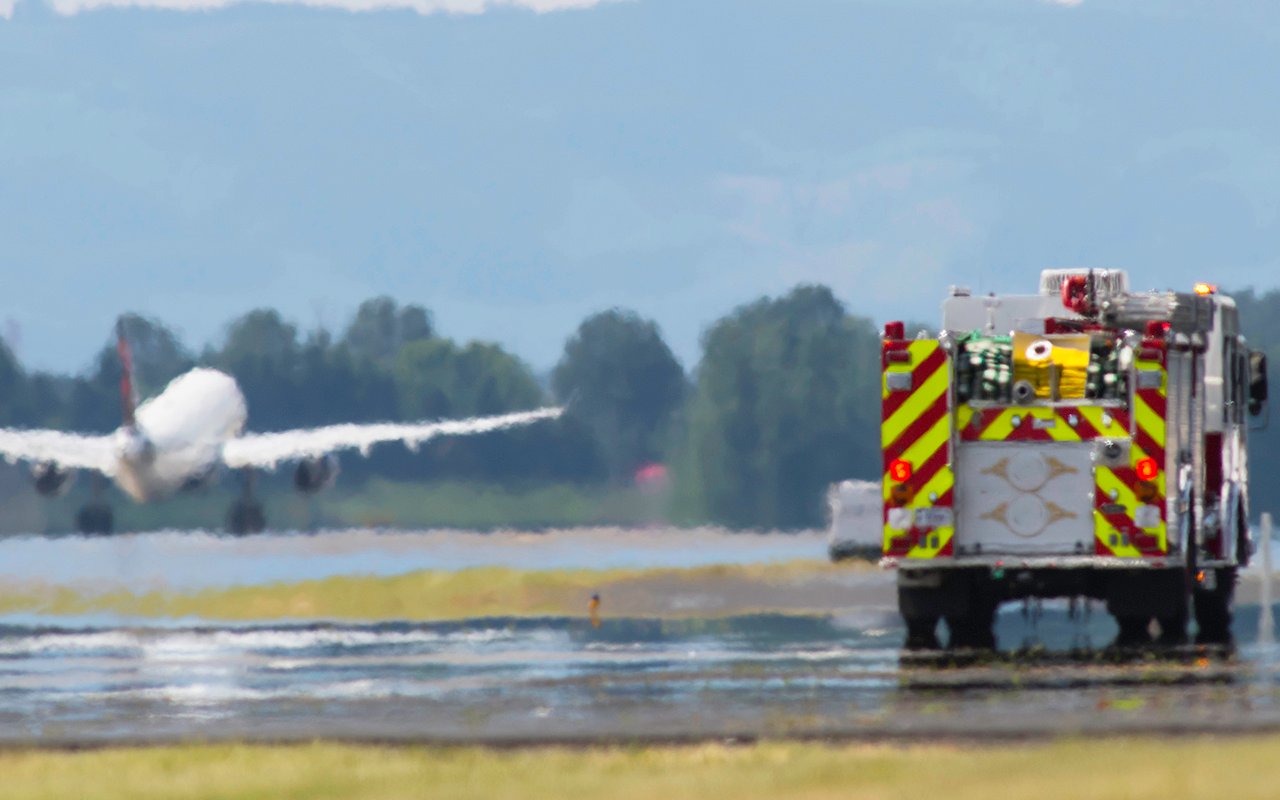
An aircraft emergency pulls in more responders than almost any other call an airport handles. ARFF, airport operations, EMS, police, dispatch, and often mutual-aid fire agencies all have a role, and they all need the same information at the same moment. When that information moves through a manual phone tree or a legacy crash phone network, each agency learns about the emergency a little later than the last, and the response fragments before it starts.
Coordination is what holds the response together, and it depends on every agency sharing one picture of the event from the first second. Our guide to airport alerting systems covers how the full system fits together. This article looks specifically at the coordination problem and how simultaneous alerting solves it.
Where fragmented communication breaks down
Many airports still run isolated systems that need a separate call or notification for each responding group. A dispatcher places one call to ARFF, another to airport operations, and a third to an outside agency. Every added step is a chance for delay or for the details to drift between calls.
Under pressure, that pattern slows decisions, leaves everyone unsure who has actually been reached, and opens the door to duplicated or conflicting instructions. It also makes the event hard to reconstruct afterward, when leadership needs to know who received what and when. The failure modes of these setups are covered in our look at crash phone networks.
How simultaneous alerting holds the response together
A modern airport alerting system connects every stakeholder in the response chain. When an emergency is declared, the system sends synchronized alerts to ARFF crews, airport operations, dispatch, and any designated mutual-aid partners at the same instant. Audio, visual indicators, and text all carry the same details.
That shared starting point changes how the response runs. ARFF gets clear staging and response instructions. Operations gets immediate situational awareness. Dispatch can put its attention on resource allocation instead of working down a call list and confirming who answered. The speed gains that follow are covered in our look at ARFF response times.
Bringing in mutual-aid and external agencies
Most airports rely on municipal fire departments, regional teams, or specialized aviation units for support, and those agencies often run different equipment and channels. A unified system sends outbound notifications in parallel with the internal alerts, so external responders get the same information as ARFF and operations and can mobilize without waiting for a second confirmation call. They arrive aligned on staging and prepared with accurate details rather than catching up on the way.
Situational awareness tailored to each role
Good communication tells responders more than when to move. It tells them what they are walking into. A precautionary landing, a fuel spill, a medical emergency, and a full aircraft fire each call for a different posture, and a modern system delivers the details each agency needs for its role without burying anyone in data that does not apply to them.
Documentation and after-action review
Coordination matters after the event too. Leadership has to review communication flow, run the after-action, and confirm the airport met its obligations under FAA Part 139. A unified system logs every activation and response automatically, which gives the review team a precise timeline instead of pieced-together recollections, and surfaces any gap worth closing before the next incident.
One environment, one response
Multi-agency response works when every participant shares the same information inside the same communication environment. A single alerting platform connecting ARFF, operations, dispatch, police, EMS, and mutual-aid partners is what makes that possible, and the payoff shows up in real incidents, as in our account of rapid aircraft emergency response at an Air Force base.
For the executive sponsor weighing the investment, the case for aircraft emergency system investment frames coordination alongside ROI, AIP funding, and risk reduction. To see how it maps to your airport, start with Westnet's aircraft emergency systems solutions.