
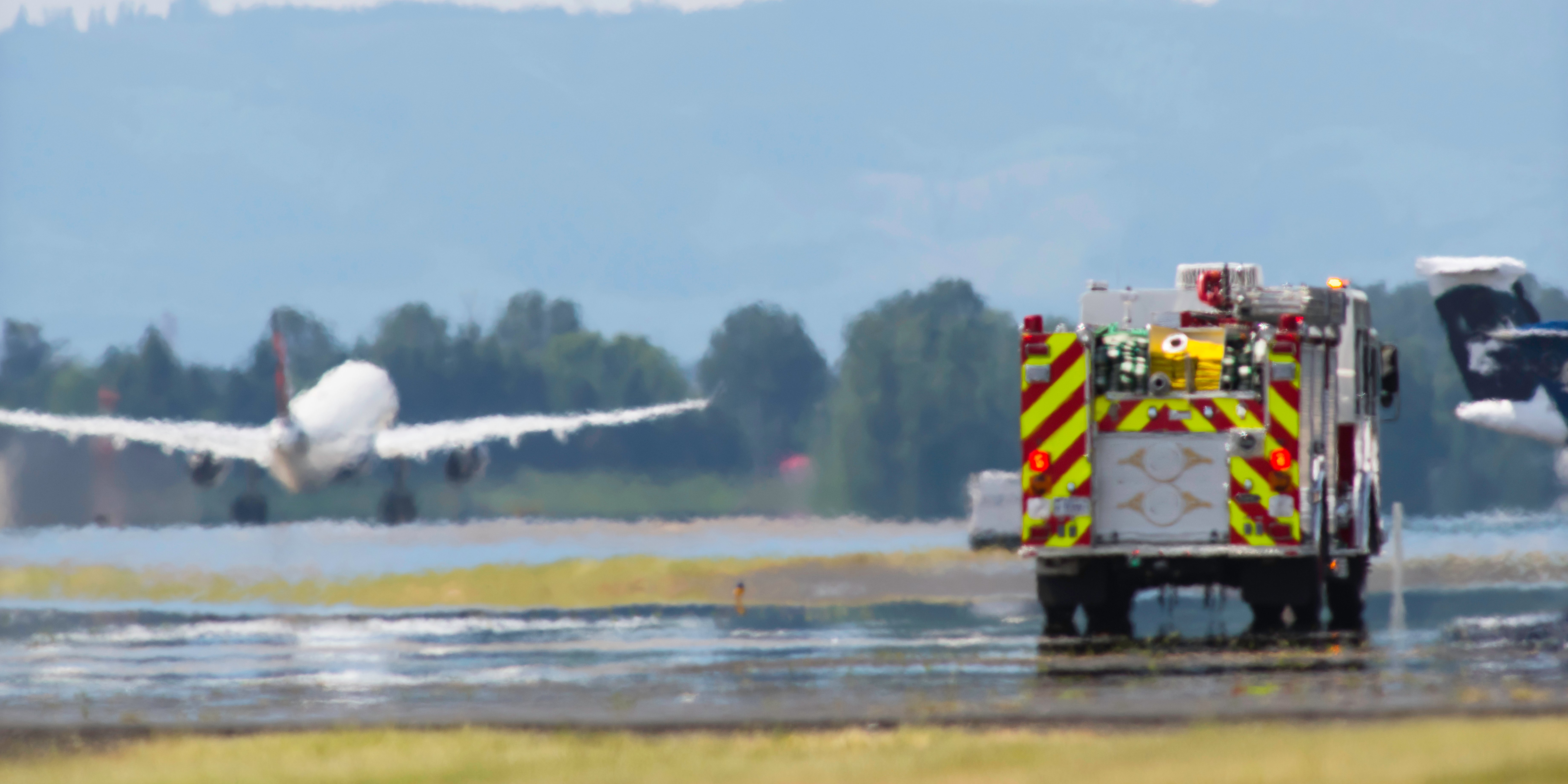
When aircraft emergencies occur, response time is not measured in minutes. It is measured in seconds.
In May 2020, first responders at Eglin Air Force Base in Florida were tested twice in less than a week when two military aircraft experienced emergency incidents. The crashes involved an F-22 Raptor and an F-35A Lightning II, two of the most advanced aircraft in service. In both cases, pilots ejected successfully and were transported to the base medical center, where they were evaluated and released.
Behind those successful outcomes was a response system designed to eliminate delay at the very first moment an emergency is declared.
The role of aircraft emergency alerting at Eglin AFB
Several years prior to these incidents, the Eglin Air Force Base Fire Department deployed Westnet’s Aircraft Emergency System (AES) to modernize how emergency alerts are delivered across the base.
Traditional crash phone systems often rely on manual steps, sequential notifications, and aging infrastructure. In many environments, those systems can take three to five minutes before crews are fully alerted and en route. In aviation emergencies, that delay can mean the difference between containment and escalation.
With AES in place, emergency alerts initiated by the Air Traffic Control Tower are distributed automatically and simultaneously. Within half a second, fire stations, dispatch, base operations, and the base hospital receive the same critical information. This allows crews to stage, prepare, and respond immediately with shared situational awareness.
Meeting response standards under real-world conditions
FAA guidance under Part 139 outlines strict response benchmarks for aircraft emergencies, including one minute for announced emergencies and three minutes for unannounced events. These standards are difficult to meet consistently when alerting systems introduce friction or delay.
During the most recent Eglin AFB incident, the fire department responded within two minutes, well inside the required window. The speed of that response was made possible by removing human delay from the alerting process and ensuring that every responder received accurate information at the same time.
AES enabled crews to move with clarity rather than confusion, even under the pressure of back-to-back incidents.
Technology and training working together
Technology alone does not save lives. It supports the people who do.
At Eglin Air Force Base, the combination of a modern aircraft emergency alerting system and the professionalism of trained first responders resulted in effective, coordinated responses to two high-risk incidents. The system ensured that responders were informed instantly. The responders ensured that the outcome was successful.
These incidents highlight the role of integrated alerting technology in aviation environments where every second matters and coordination across multiple departments is essential.
Acknowledging service and readiness
As originally reported by FireHouse, the implementation of Westnet’s Aircraft Emergency System played a key role in improving response times and incident coordination during these events. We echo their recognition of the Eglin Air Force Base Fire Department and thank the responders who serve with readiness and professionalism every day.
You can read the original coverage on FireHouse here:

Westnet Tech Improves Response after Air Base Crashes – FireHouse